Article: Luxury Jewellery Authentication and Provenance: A Buyer’s Guide
Luxury Jewellery Authentication and Provenance: A Buyer’s Guide
To check whether pre-owned luxury jewellery is genuine, ask a specialist to examine the piece and explain how its markings, materials and construction match the stated maker and period. Provenance is the documented history of ownership or sale. Any receipts, auction records or original papers should be matched to the jewel itself.
What is the difference between authentication and provenance?
Authentication establishes whether a jewel is what it is represented to be. Provenance records what is known about its previous ownership and sale, such as the boutique that first sold it or an auction where it later appeared.
A vintage brooch may have a well-supported maker attribution even if its early ownership history is unknown. By contrast, a bracelet offered at a premium because it belonged to a particular collector needs evidence linking that specific bracelet to the collection. A dated auction catalogue with a recognisable photograph and matching details carries more weight than an undocumented account.
How is pre-owned designer jewellery authenticated?
A specialist examines the piece as a whole. For a signed jewel, that means assessing whether the signature, metal, dimensions, construction and any reference or serial number are consistent with the stated design and period. The details that matter will vary by maker, model and age.
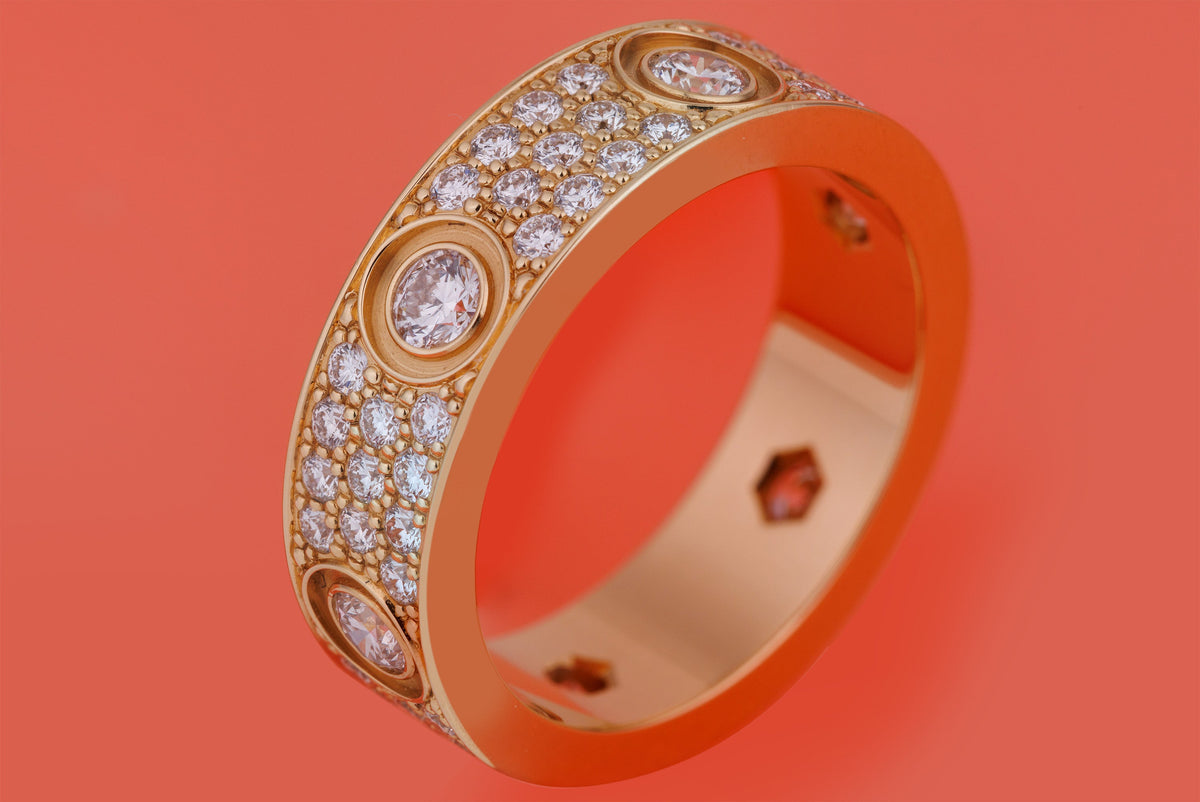
For example, when looking at a pre-owned Cartier bracelet, ask for clear photographs of the inside and outside, along with the closure and any markings. Ask how the bracelet’s width, size and closure correspond to the model in the listing. A serial number can help link the bracelet to its papers when both show the same number, but it should be assessed alongside the rest of the piece.
Condition is a separate question. A genuine piece can have been resized, polished or repaired, and a stone or clasp may have been replaced. Ask about known alterations and check that the written description reflects them, particularly if original components matter to you.
What do hallmarks, certificates and original papers tell you?
Each type of evidence answers a different question. Check who issued the document, what it covers and how it can be matched to the jewel.
| Evidence | What it helps establish | What to check |
|---|---|---|
| Recognised hallmark | The tested fineness of the precious metal | Ask for a clear photograph of the marks. Treat designer attribution as a separate check. |
| Signature, model reference or serial number | The claimed maker, design or individual piece, depending on the mark | Ask whether the markings fit the model and period and match any item-specific papers. |
| Original boutique receipt or brand papers | An original sale or the brand’s recorded details, depending on what the document contains | Match the date, description and any recorded reference or serial number. |
| Jeweller’s certificate of authenticity | The issuing jeweller’s assessment of the piece described | Check who issued it, which jewel it describes and what the wording covers. |
| Gemmological laboratory report | Findings about the stone that was examined, such as identity or grading, depending on the report | Verify the report with the issuing laboratory and ask how the stone has been matched to it. |
| Auction catalogue or invoice | A previous listing or sale and any documented ownership history | Cross-check the lot number, photographs, dimensions and distinguishing features. |
A recognised UK hallmark relates to the precious metal. A stamp such as “750” is a fineness mark and should be read in context rather than treated as a complete UK hallmark. Read the British Hallmarking Council’s guidance.
If a diamond is offered with a GIA report, GIA Report Check lets you compare the report details with GIA’s records. Ask the seller how they matched the report to the stone you are buying. A report for a diamond covers the diamond described in it. The maker and condition of the ring, bracelet or necklace are separate matters.
What should you ask before buying pre-owned luxury jewellery?
Ask what the seller has verified, what comes with the piece and what remains unknown. If you are buying online, ask for photographs of the actual jewel and get the details that affect your decision in writing.
- How was the piece authenticated?
- Can I see close-ups of the signature, hallmarks and any serial or reference number?
- Which papers are included, who issued them and how do they match the piece?
- Has the piece been resized, repaired or altered? Are any stones or components known to have been replaced?
- If the price reflects a rare reference or a particular ownership history, what evidence supports that claim?
- Can I see the piece in person, and what are the return terms if I order online?
When comparing prices, look at examples of the same design, size and materials where possible. A difference in condition, originality or documented history may explain why two otherwise similar jewels are priced differently.
How does Jewel Collectors authenticate jewellery?
Our jewellery specialists assess every piece before it is offered for sale. We examine features such as the signature, materials, hallmarks and construction in the context of the piece’s maker and period. Every jewel we sell comes with a Jewel Collectors certificate of authenticity under our authenticity guarantee. Original brand papers, boxes and independent laboratory reports vary by piece. Check the listing or ask us to confirm what accompanies the jewel.
You can browse our jewellery collection or book a private viewing in Mayfair to examine a piece in person and discuss its condition, markings and available paperwork.
Frequently asked questions
Can vintage jewellery be authentic without its original papers?
Yes. A specialist can assess a vintage jewel using its materials, construction, markings and documented examples from the same maker or period. The available evidence determines how confidently the piece can be attributed.
Can you authenticate designer jewellery from photos alone?
Photos can help a specialist identify inconsistencies and decide what to examine more closely. A firm opinion may require the jewel in hand to inspect its construction, markings, stones and signs of alteration.
Does original packaging prove jewellery is genuine?
An original box can add to the completeness of a piece. Authenticity depends on an assessment of the jewel itself and how any supporting documents relate to it.
Does documented provenance make jewellery more valuable?
Documented provenance can affect value when it establishes a meaningful history, such as ownership by a recognised collector. The effect depends on the strength of the evidence and whether that history matters to buyers of the piece.